
Audio comparisons
USB-C Headphone DAC Adapters for Wired Listening
Our Pick is Kiwi Ears AD1 for its explicitly scoped CTIA headset and Android in-line control claims. HiBy Digital D1 is the alternative for listed physical volume buttons. Fosi Audio D2 is the alternative for listed microphone capture in a short flat-cable design. These are conne
Short verdict
Our Pick is Kiwi Ears AD1 for its explicitly scoped CTIA headset and Android in-line control claims. HiBy Digital D1 is the alternative for listed physical volume buttons. Fosi Audio D2 is the alternative for listed microphone capture in a short flat-cable design. These are connection and control choices, not a measured sound-quality or power ranking.
Check the exact host, operating system, headset wiring and required buttons. USB-C shape or a high sample-rate figure does not establish universal compatibility or audible improvement.
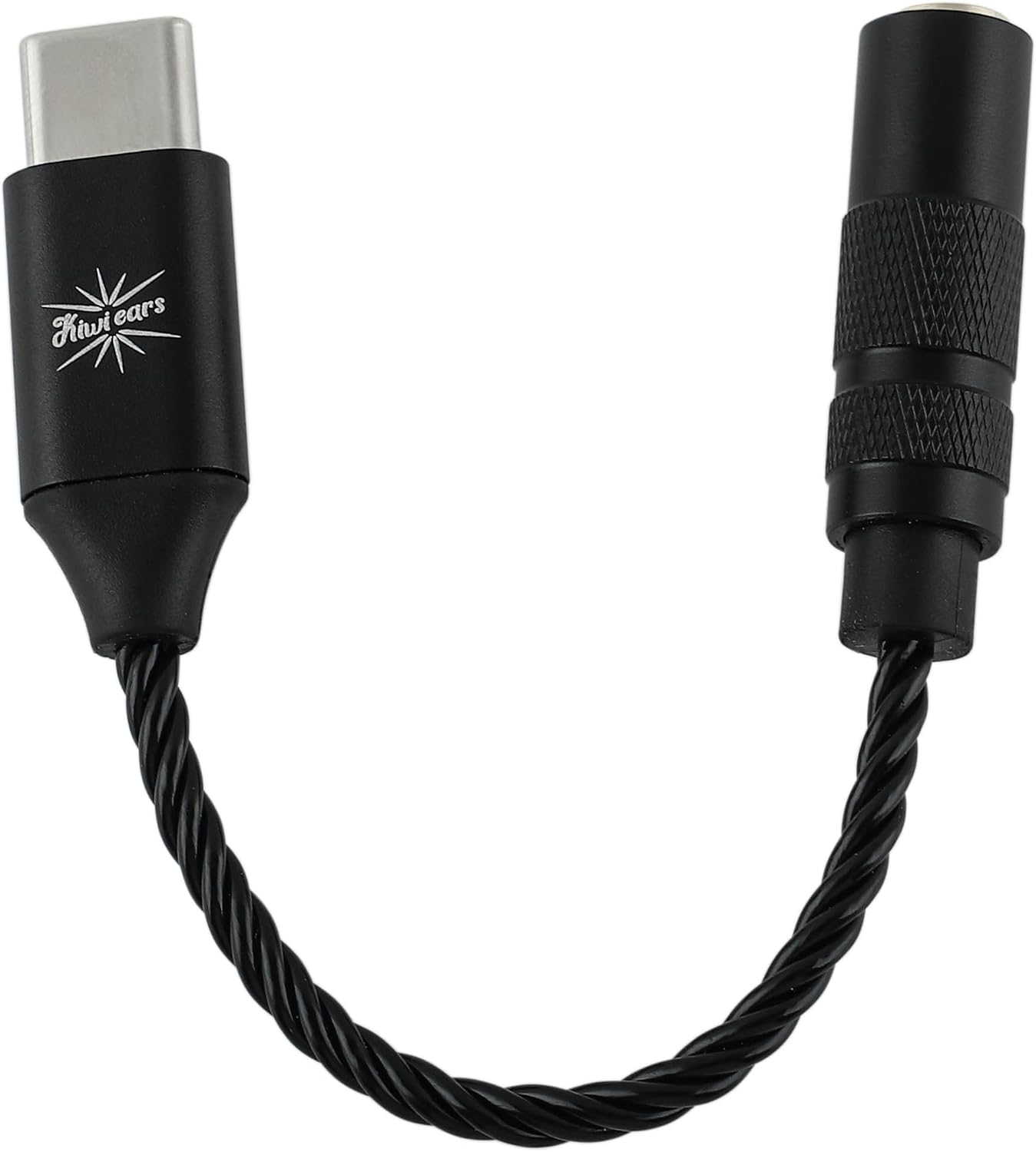
Our Pick: Linsoul Kiwi Ears AD1 — B0G3597PBC
The listing specifies a USB-C-to-3.5mm DAC arrangement, CTIA-compliant headset wiring and Android-compatible in-line controls. It explicitly excludes OMTP, TS and TRS microphone devices. That specificity makes it a useful starting point when headset wiring matters, but it does not promise every button works on every phone or operating system.
Customer reports praise sound, build and straightforward use but describe a small adapter that is easy to lose, limited perceived volume and background noise at low volume. Other reports describe clean playback. Those differences mean neither the advertised noise figures nor customer praise establishes a measured noise advantage or sufficient output for every headphone.
Long-term durability is not established by the available reports. Choose it for the documented wiring/control scope if it matches your headset, not the listing's universal or professional language. Confirm the exact host and microphone function before relying on it for calls.
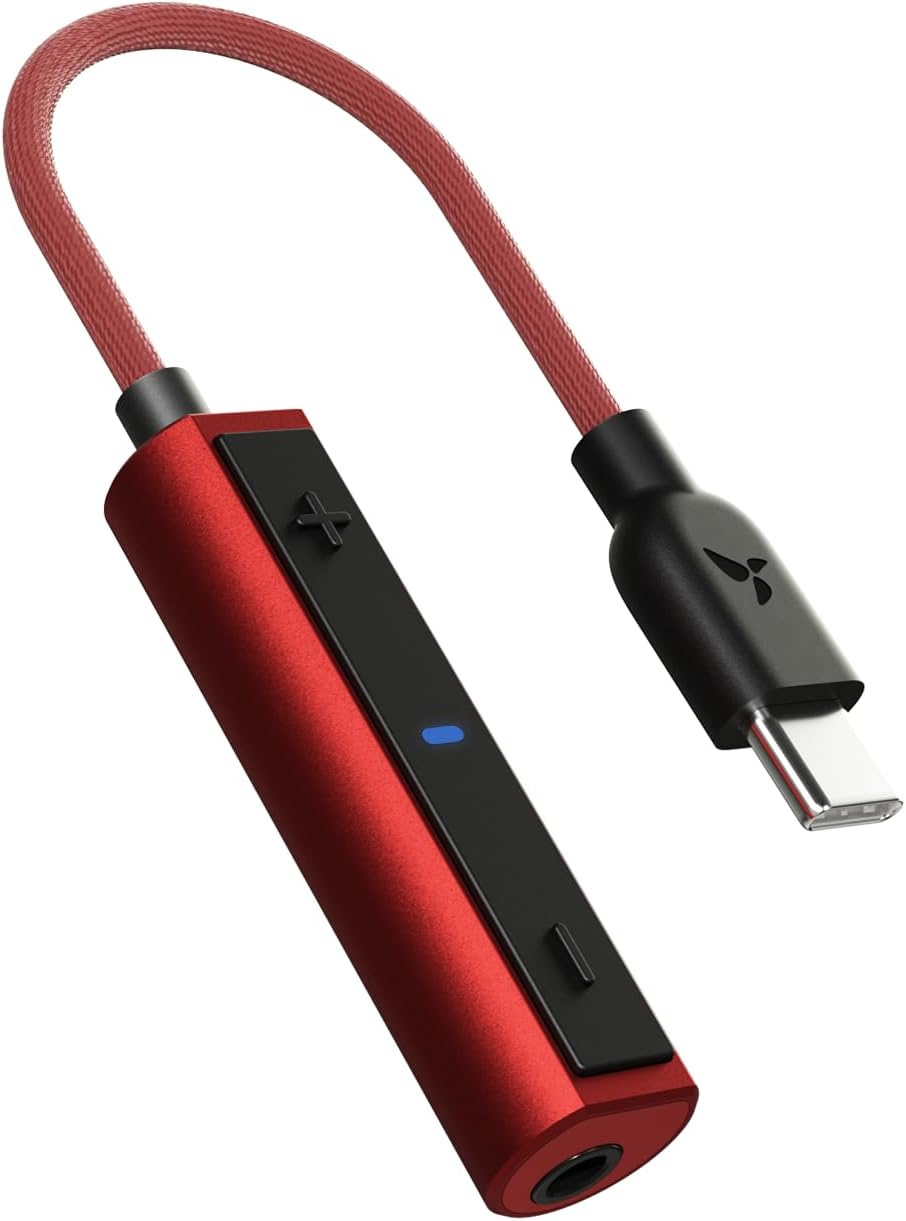
Best for listed physical volume buttons: HiBy Digital D1 — B0DN181FC2
The listing describes physical volume buttons with 50-step adjustment and an option to interface with the HiByMusic app's bitperfect USB output. Those are the reasons to consider it if you want controls on the adapter. The named app feature does not establish that an app is required for every use or that every host supports the same behaviour.
Customer reports describe intermittent buttons, early failure, internal wiring or cord problems, and a report of control trouble after an iPhone update or device change. The exact hardware/software context is not independently established here, so it is a compatibility caution rather than a universal iPhone exclusion. These complaints matter directly to a button-focused recommendation; test the controls on the exact host you intend to use.
The advertised PCM ceiling is format support, not proof of better sound or adequate headphone drive. The feature text does not establish microphone or headset-remote support for every wiring arrangement. Long-term reliability is not promised, and a certification claim is not used here as a guarantee of audible quality.
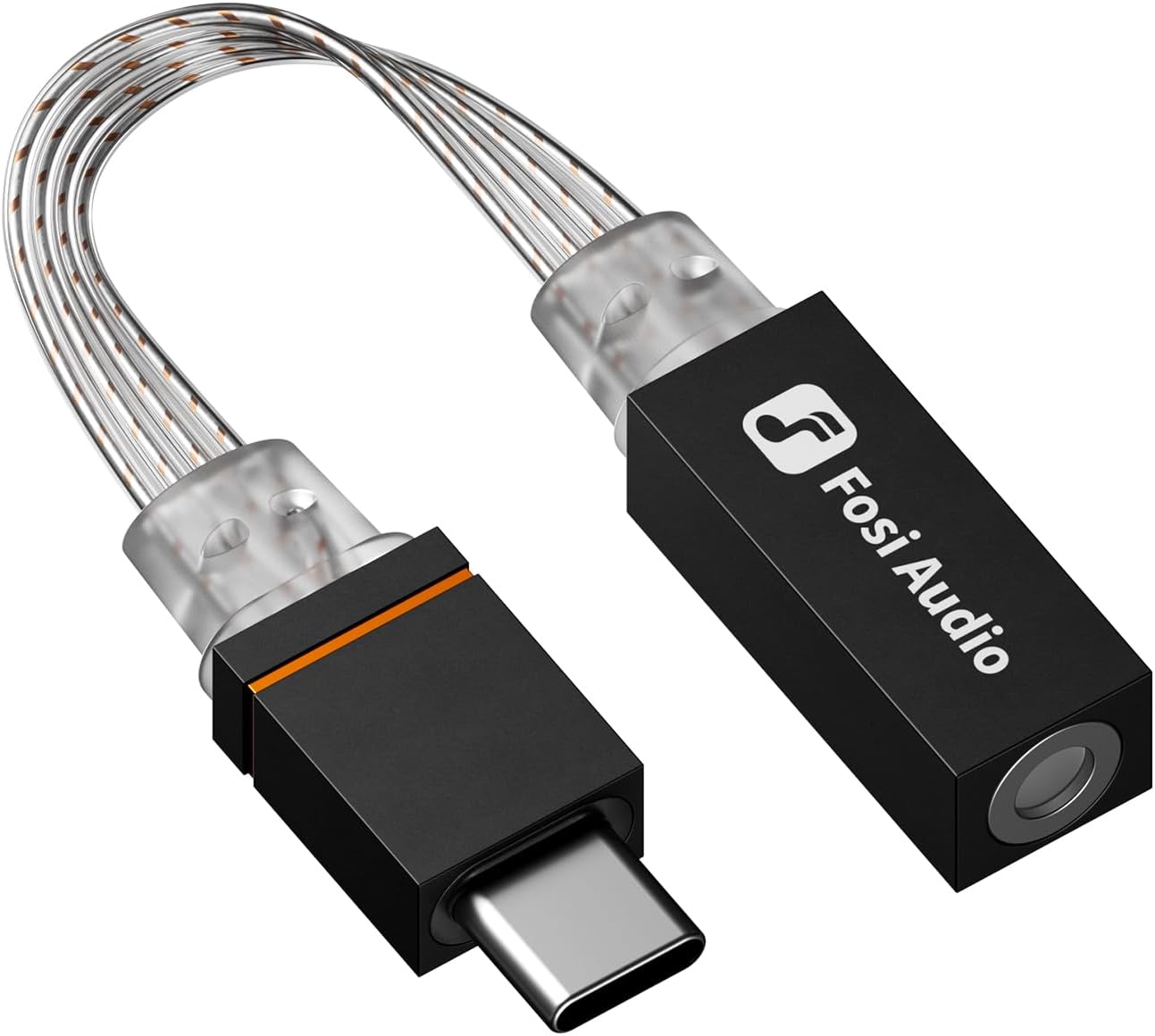
Best for listed microphone capture in a short flat-cable design: Fosi Audio D2 — B0GGWYQY2Y
The listing identifies a microphone ADC, headset protocol recognition and in-line volume/playback support. It describes a 0.75mm flat cable and a total wire length of 3.74 inches. These are listed design and control features, not a guarantee that every headset or host will support every function. Check clearance with your phone case and the cable route before buying.
Customer reports describe basic features, no on-adapter volume buttons, a desire for more power or different sound character, and cable longevity that is not yet established. Some describe a basic plastic-feeling build, while the listing claims aluminium connector construction. Those are conflicting descriptions, not a resolved materials finding; assess the actual unit rather than treating either as verified durability evidence.
The listed 31mW at 32 ohms has a load attached, but the full measurement conditions are not established here. It does not prove suitability for every headphone or superiority to the other adapters. The available evidence does not establish long-term reliability or a balanced-output requirement being met; do not assume one.
Supported function snapshot
| Exact model | Listing-backed distinction | Important limit | Grade |
|---|---|---|---|
| Kiwi Ears AD1 | CTIA scope; Android in-line controls | Excludes named microphone wiring types; exact host still matters | Not rated |
| HiBy Digital D1 | Physical 50-step volume controls; named HiByMusic option | Button failures reported; microphone scope not established | Not rated |
| Fosi Audio D2 | Mic capture/remote claim; short flat cable | No on-adapter buttons reported; exact protocol/host and durability unverified | Not rated |
All three advertise USB-C-to-3.5mm decoding. Format support does not establish improved sound; power and impedance cannot establish driveability without the rest of the conditions.
Match the complete wired path
Confirm the exact host, OS and analogue headset connection. Playback, microphone capture and in-line control are separate functions. A digital DAC adapter is not interchangeable with every passive USB-C cable or charger accessory.
An advertised sample rate and bit depth describe supported data, not what a listener will hear. Output power needs the actual load and conditions before meaningful comparison. Sensitive earphones and demanding headphones may have different requirements, and impedance alone cannot predict loudness.
Check connector clearance, strain relief and whether the cable detaches. Balanced and unbalanced connections are not interchangeable; do not improvise a wiring shortcut. Charging or dual-function support is not inferred from another model's features. Follow exact power and care instructions.
Research limits
This is listing and attributed-customer research, not electrical, noise, power or listening tests. Reports are shopping signals rather than verified failure rates. No measured sound, distortion, output-noise, durability or driveability ranking is inferred, and no warranty duration or support outcome is promised.